Virtù Teramane (Le virtù teramane)
Overview
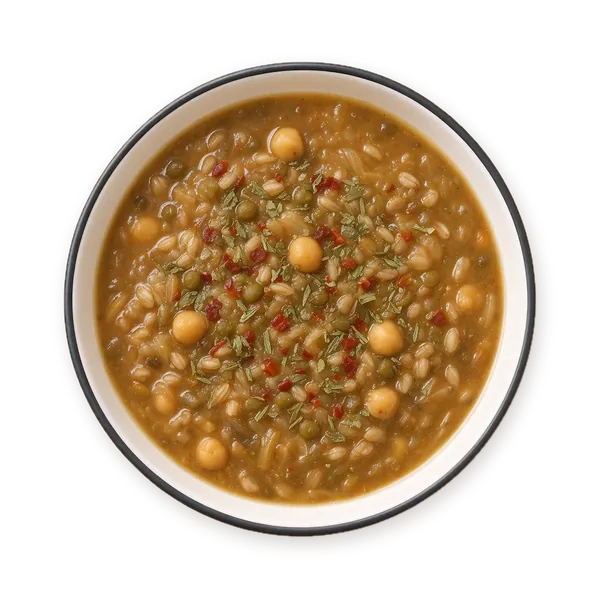
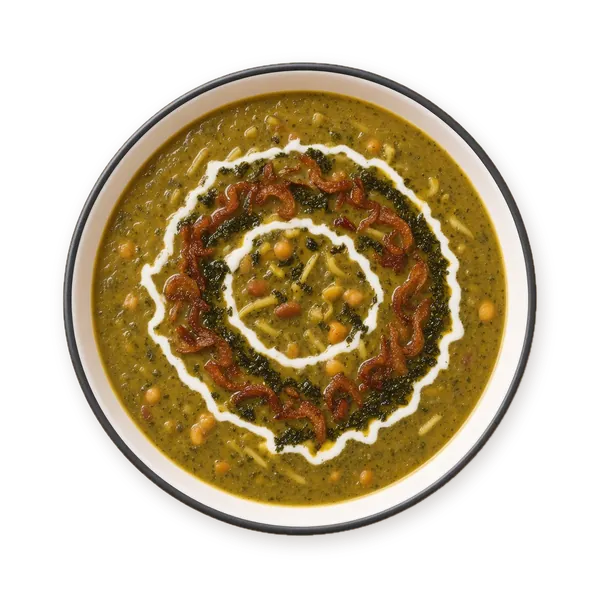
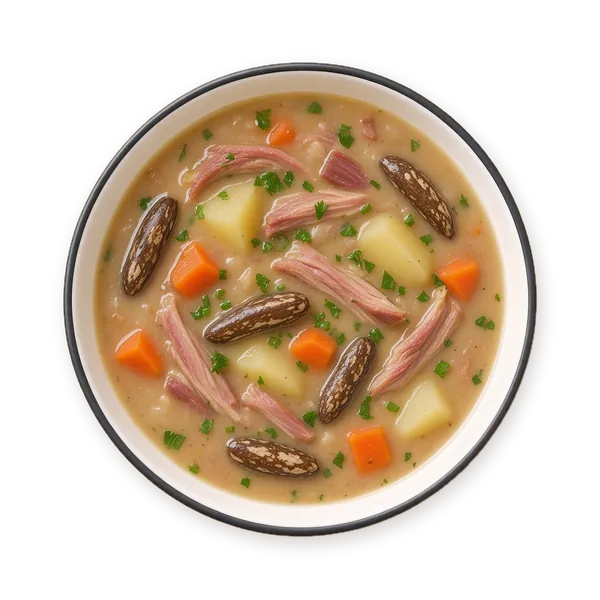
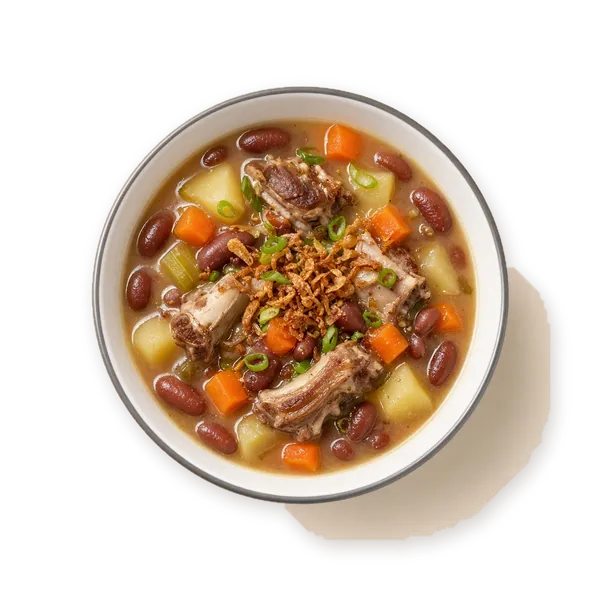
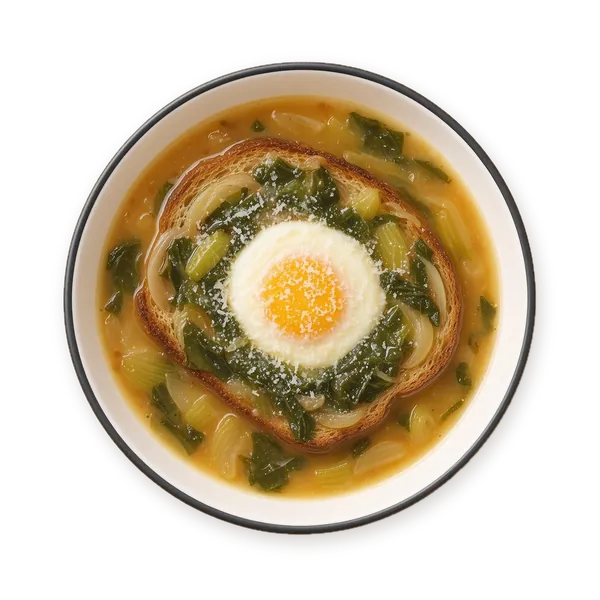
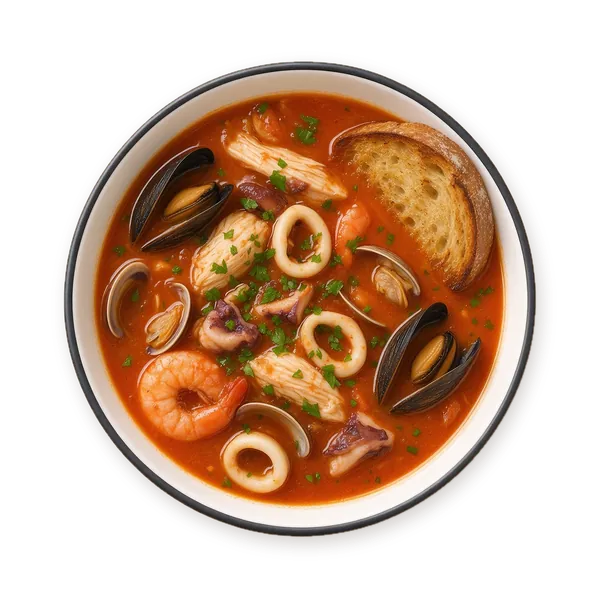
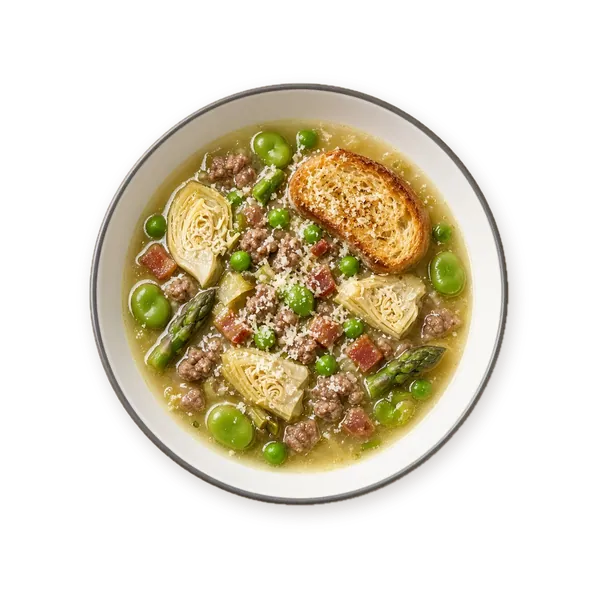
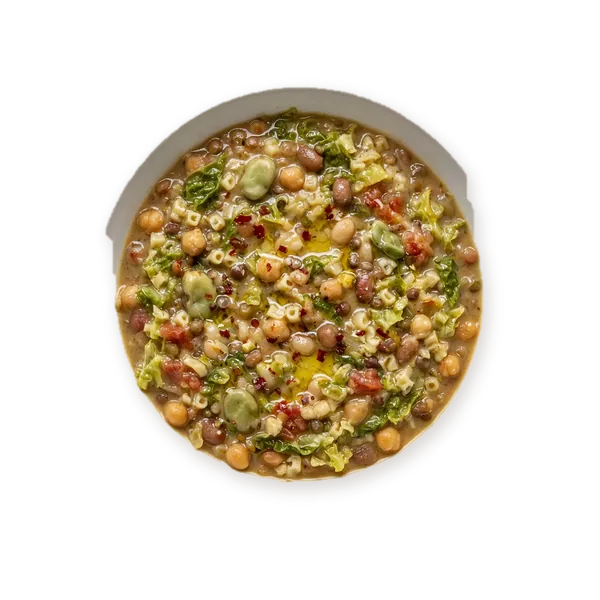
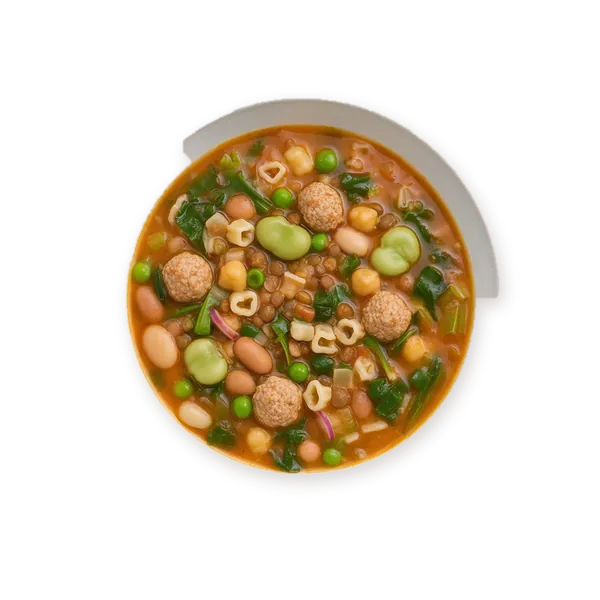
Le virtù is a rich spring soup from Teramo in Abruzzo, central Italy. It brings together the last dried pulses of winter and the first fresh vegetables of spring: beans, lentils, chickpeas, split peas and dried broad beans are soaked and cooked separately, then joined by fresh peas, broad beans, artichokes, chard, spinach, endive and wild herbs. Pork rind, pig's trotter, ear and prosciutto bone give the broth its depth, and tiny meatballs are often added. Several kinds of dried and fresh egg pasta, including leftover broken pieces, are cooked in it at the end. The result is thick, green and full of flavour, with herbs such as mint and marjoram.
History
Le virtù is cooked in Teramo every year on 1 May, a celebration of the passing of winter and the start of the new season, and families share bowls with neighbours. Legend says it was first made by seven virgins, each of whom brought seven ingredients, and tradition still asks for seven kinds of pulses, seven vegetables, seven types of pasta and seven hours of cooking. It also used up what was left in the pantry before the new harvest.
Main ingredients
Dried beans, lentils, chickpeas, spring vegetables, small pasta, pork. The soup is built on legume and pork broth and is usually served hot. Diet: contains meat; not usually gluten-free.
Explore: Lentil soups · Chickpea soups · Bean soups · Pork soups · More soups from Italy
Recipe
Method
- 12 h
Cook the soaked pulses separately until tender, and simmer the pork rind, trotter and bone in 3 l water for 2 hours.
- 2
Fry the onion in olive oil with the tomatoes and add to the pork broth.
- 320 min
Add the cooked pulses, peas, broad beans and artichokes and simmer for 20 minutes.
- 415 min
Add the greens and herbs and cook for 15 minutes.
- 5
Cook the pasta in the soup until tender, season and serve.
- ✓
Serve. About 5 h from start to bowl.
Sources
Description, history and recipe written by SoupWiki and checked against the sources above. Calories and times are rough estimates.