Samgyetang (삼계탕)
Overview
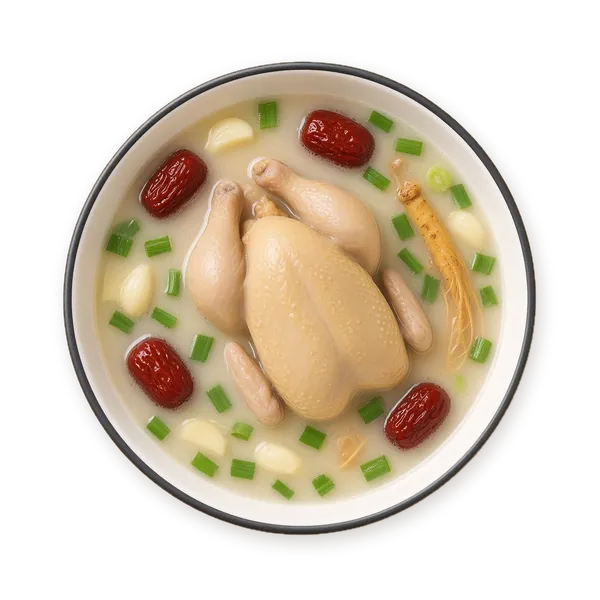
Samgyetang is a Korean soup of a whole young chicken stuffed with glutinous rice, garlic, jujubes and a root of ginseng, then simmered until the meat is tender and the broth turns milky. Each person usually gets a whole small bird in an earthenware pot, with salt and pepper on the side for seasoning to taste. Spring onions are sprinkled on top. The rice inside becomes soft and sticky, and the broth is gentle and nourishing, with a subtle herbal note from the ginseng.
History
Koreans traditionally eat samgyetang on the hottest days of summer, known as boknal, following the idea of fighting heat with heat to restore energy. Chicken soups with ginseng became especially popular in the twentieth century as ginseng became more available. Today restaurants specialising in samgyetang have long queues on those summer days, and ready-made versions are sold in supermarkets.
Main ingredients
Whole young chicken, glutinous rice, ginseng, jujubes, garlic, spring onion. The soup is built on chicken broth and is usually served hot. Diet: contains meat; usually gluten-free.
Explore: Chicken soups · Rice soups · More soups from South Korea
Recipe
Method
- 1
Stuff each chicken with rice, garlic, jujubes and ginseng; tie the legs.
- 2
Place in a pot with water and bring to the boil.
- 3
Simmer for about an hour, skimming, until very tender.
- 4
Serve whole in bowls with salt, pepper and spring onion.
- ✓
Serve. About 1h 30m from start to bowl.
Pictures


Sources
Description, history and recipe written by SoupWiki and checked against the sources above. Calories and times are rough estimates.