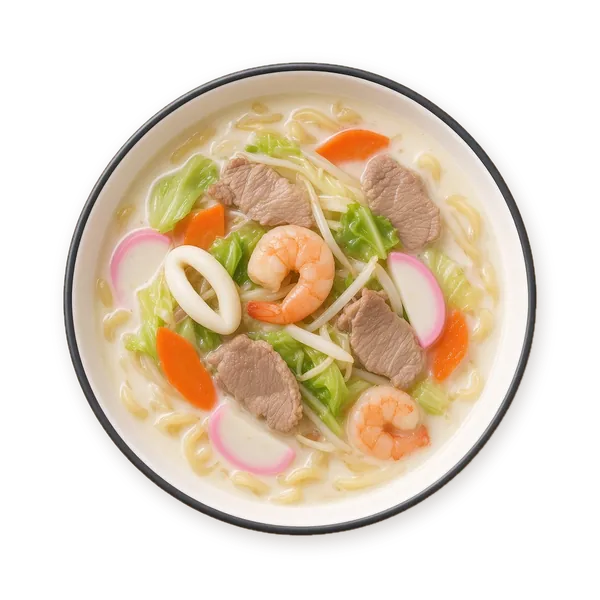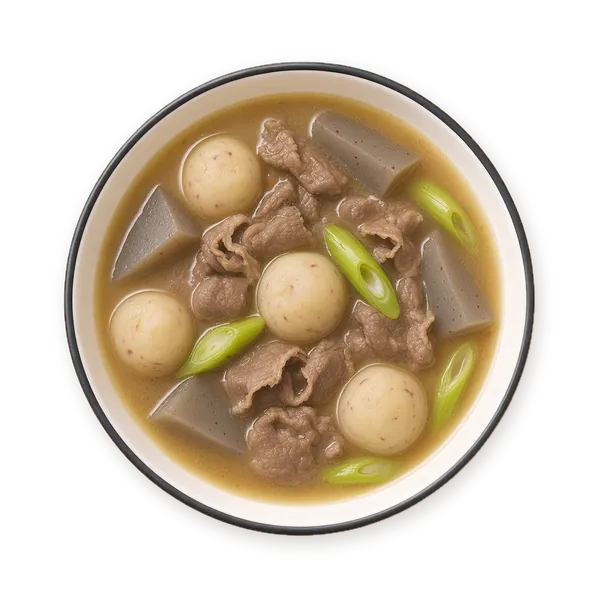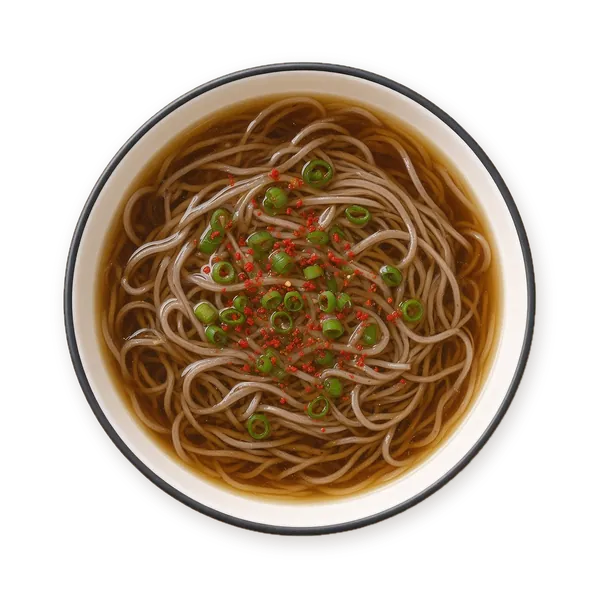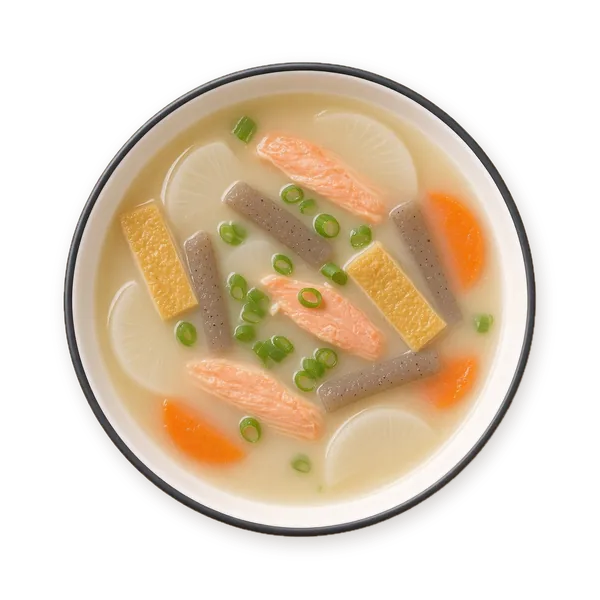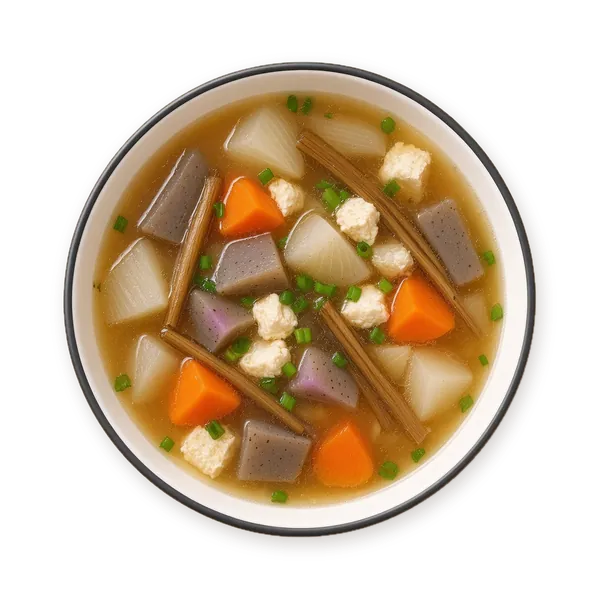


Hōtō (Hōtō)
Overview
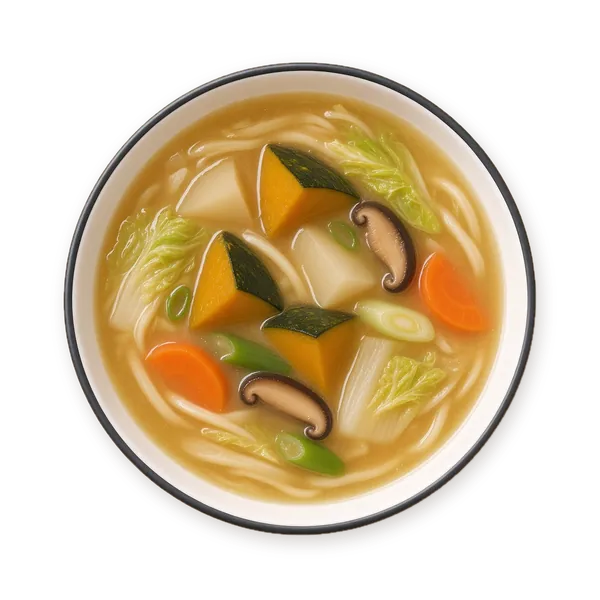
Hōtō is a thick, hearty noodle soup from Yamanashi Prefecture, at the foot of Mount Fuji. Wide, flat wheat noodles, thicker than udon and made without salt, are cooked straight in a dashi broth seasoned with miso, so their starch thickens the soup. Large pieces of kabocha pumpkin are the most important vegetable, and they melt partly into the broth, making it sweet and creamy. Daikon, carrot, Chinese cabbage, taro, shiitake and leeks are also added, and some people add pork or chicken. It is served bubbling in an iron pot and is a classic dish for the cold winters of the region.
History
Yamanashi is a mountainous area where rice was hard to grow, so wheat and barley noodles were an everyday food for farming families. Local legend says that the warlord Takeda Shingen fed hōtō to his soldiers in the 16th century, cutting the noodles with his sword. Whatever its origin, hōtō is now the symbol of Yamanashi food and is sold in many restaurants around Kōfu and the Fuji Five Lakes.
Main ingredients
Flat thick wheat noodles, miso, kabocha pumpkin, daikon and carrot, chinese cabbage, shiitake. The soup is built on dashi and miso broth and is usually served hot. Diet: pescatarian; not usually gluten-free.
Explore: Noodle soups · Cabbage soups · Pumpkin and squash soups · More soups from Japan
Recipe
Method
- 1
Mix the flour and water into a dough, rest it, roll it out and cut wide, flat noodles.
- 2
Bring the dashi to the boil with the pumpkin, daikon, carrot and shiitake.
- 315 min
Add the raw noodles and cabbage and simmer for 15 minutes, stirring now and then.
- 4
Stir in the miso, add the leek and serve in the pot.
- ✓
Serve. About 1 h from start to bowl.
Sources
Description, history and recipe written by SoupWiki and checked against the sources above. Calories and times are rough estimates.