Pozole Rojo (Pozole rojo)
Overview
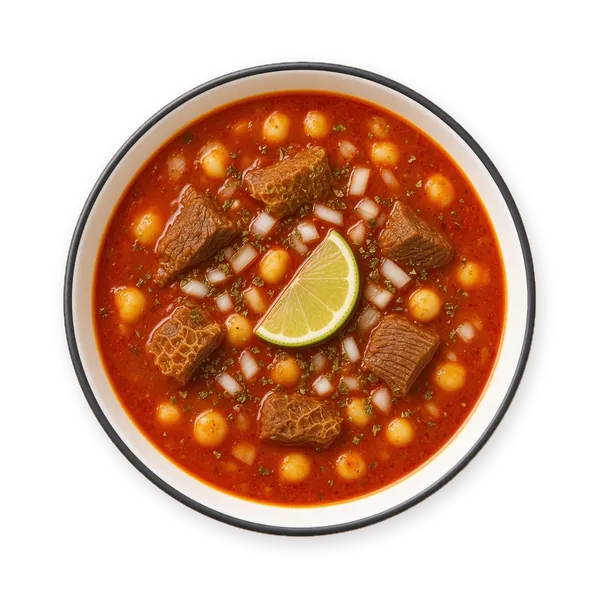
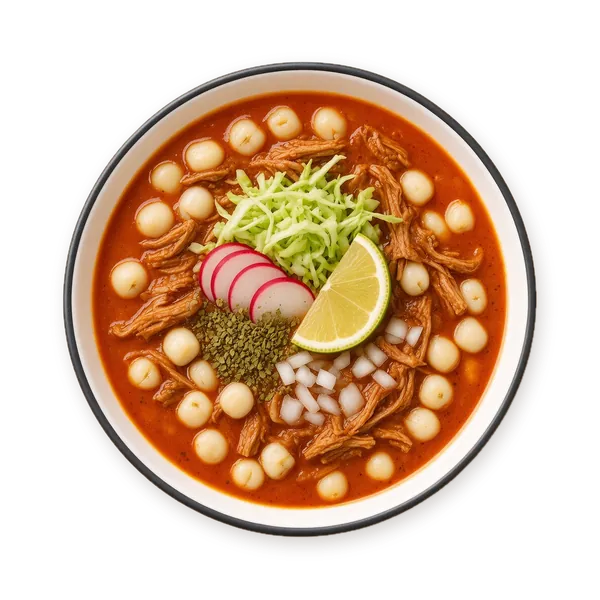
Pozole is a festive Mexican soup with roots that reach back before the Spanish conquest, when it held ceremonial importance. Its key ingredient is hominy: large white corn kernels treated with alkali (nixtamalised) so they swell and burst open like flowers as they cook. In pozole rojo, typical of Jalisco, the pork and hominy broth is coloured and flavoured with a sauce of dried guajillo and ancho chillies blended with garlic. White pozole is left plain and green pozole from Guerrero uses pumpkin seeds and green chillies. It is a centrepiece for Independence Day and other celebrations, and diners load each bowl with shredded cabbage, radish, onion, oregano, lime and tostadas.
History
Pozole is one of Mexico's oldest dishes, with roots in pre-Hispanic times, when maize was sacred and the soup had ceremonial significance. Nixtamalisation, the process of soaking corn in an alkaline solution that pozole depends on, was developed in Mesoamerica thousands of years ago. After the Spanish conquest, pork became the usual meat, and regional styles developed, with red pozole linked to Jalisco and green pozole to Guerrero. Today it is a festive dish, especially around Mexican Independence Day celebrations.
Main ingredients
Hominy (nixtamalised corn), pork shoulder, dried guajillo and ancho chillies, garlic, oregano, radish and cabbage. The soup is built on pork and chilli broth and is usually served hot. Diet: contains meat; usually gluten-free.
Explore: Pork soups · Cabbage soups · Corn soups · More soups from Mexico
Recipe
Method
- 11.5 h
Simmer the pork with half the onion and a few garlic cloves in 3.5 l salted water for 1.5 hours.
- 2
Toast and soak the chillies, then blend with 3 garlic cloves and a little broth; strain.
- 3
Shred the pork, return it to the pot with the hominy and chilli sauce.
- 430 min
Simmer for 30 minutes, add oregano and season.
- 5
Serve with cabbage, radish, onion, lime and tostadas for everyone to add.
- ✓
Serve. About 3 h from start to bowl.
Pictures


Sources
Description, history and recipe written by SoupWiki and checked against the sources above. Calories and times are rough estimates.