Muzongué (Muzonguê)
Overview
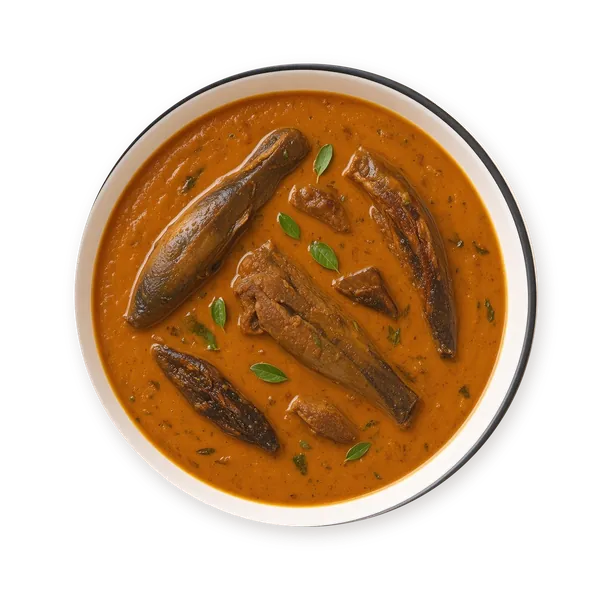
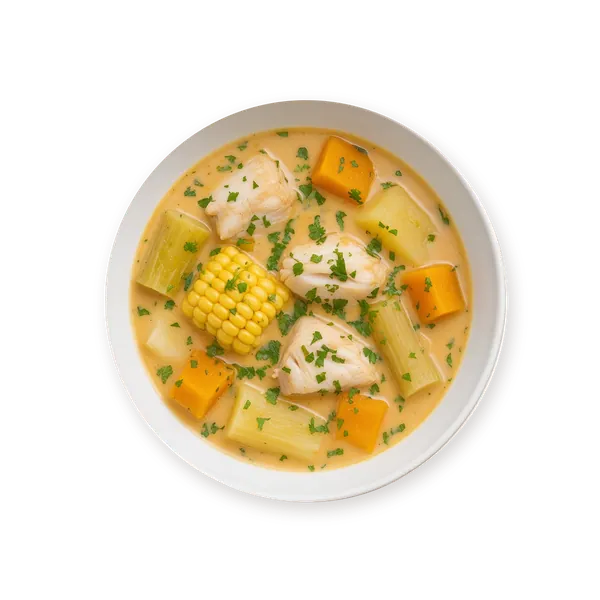
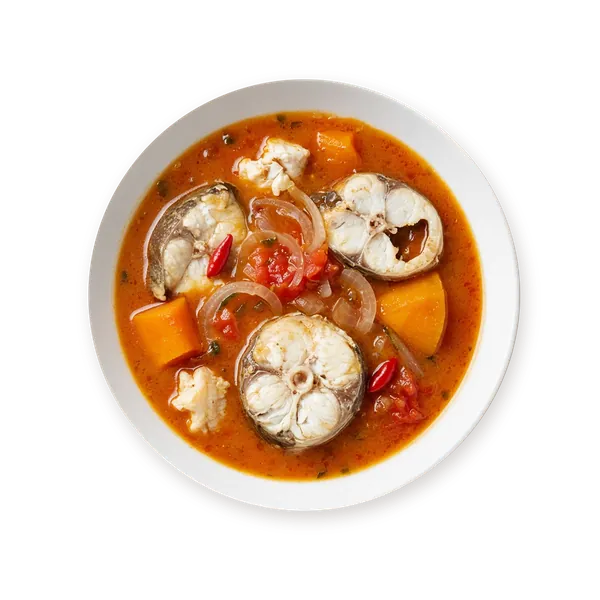
Muzongué is the best-known fish soup of Angola, a light but deeply flavoured broth coloured red by palm oil. Water is brought to the boil with palm oil, peeled tomatoes and thinly sliced onion, and chunks of sweet potato go in with crushed gindungo, the small hot chilli of Angolan cooking. Thick steaks of fresh fish such as sea bream or snapper are added with cubes of dried, salted fish such as corvina, soaked first if they are very salty, and everything simmers for about ten minutes more. The soup is ladled into a tureen and served with cooked spinach, farinha de pau, the toasted cassava meal, and funge, the smooth cassava porridge eaten across Angola.
History
Muzongué belongs to the cooking of Luanda and the Kimbundu-speaking country around it, where fresh fish from the Atlantic and dried fish from the coast have long been basic foods. In Luanda it is the soup of the morning after: it is traditionally served at dawn, after a long night of music and dancing at a party or a wedding. Historians of colonial Luanda have used funge and muzongué as symbols of the city's African food, eaten in the musseques, its popular quarters, between 1945 and 1975.
Main ingredients
Fresh fish, dried fish, palm oil, sweet potato, tomatoes, gindungo chilli. The soup is built on red palm oil fish broth and is usually served hot. Diet: pescatarian; usually gluten-free.
Explore: Fish and seafood soups · Tomato soups
Recipe
Method
- 110 min
Bring 2 l water to the boil with the palm oil, tomatoes and onions and simmer for 10 minutes.
- 210 min
Add the sweet potato and the crushed chilli and cook for 10 minutes.
- 310 min
Add the fresh fish and the dried fish and simmer gently for about 10 minutes, until everything is cooked.
- 4
Taste for salt, as the dried fish is salty.
- 5
Serve in a tureen with cooked spinach, farinha de pau and funge.
- ✓
Serve. About 1 h from start to bowl.
Sources
Description, history and recipe written by SoupWiki and checked against the sources above. Calories and times are rough estimates.