Lobster Bisque (Bisque de homard)
Overview
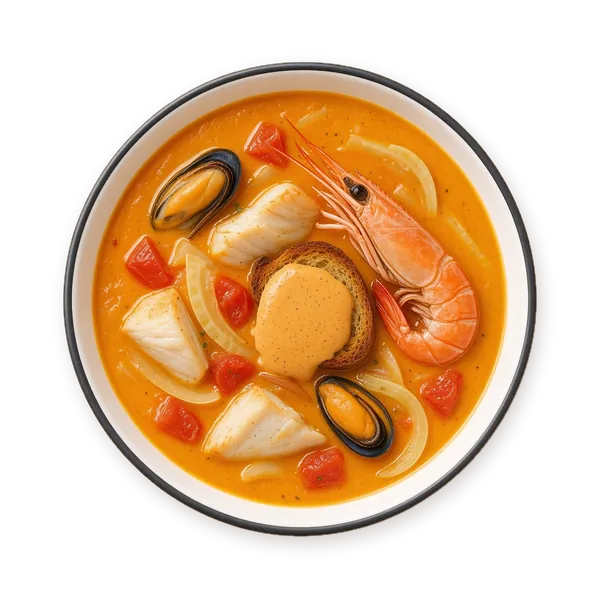
Lobster bisque is a smooth, luxurious French soup made from lobster shells and meat. The shells are roasted in butter with shallot, carrot and tomato paste, flamed with brandy and simmered with white wine and stock to draw out every bit of flavour. The liquid is strained, thickened with a little rice or roux and finished with cream, giving a velvety coral-pink soup. Pieces of lobster meat, a swirl of cream and chopped chives or tarragon go on top. It is served in small portions as a rich starter.
History
Bisque is a classic of French haute cuisine, first recorded in the seventeenth century, when it was made with pigeon or quail before shellfish became the norm. Cooks of the period valued it as a way to use every part of an expensive crustacean. Escoffier and other chefs set down the modern method based on roasted shells, rice and cream. Today crab, crayfish and prawn bisques are made the same way, but lobster remains the best known.
Main ingredients
Lobster shells and meat, butter, shallot, tomato paste, brandy, cream. The soup is built on shellfish stock and is usually served hot. Diet: pescatarian; usually gluten-free.
Explore: Tomato soups · More soups from France
Recipe outline serves 4 · ~105 min
Ingredients
- 2 cooked lobsters, meat removed and shells kept
- 50 g butter, 2 shallots, 1 carrot
- 2 tbsp tomato paste
- 50 ml brandy, 150 ml white wine
- 1 l fish stock, 40 g rice
- 200 ml double cream, chives
Allergens: Contains: Crustaceans, Fish, Milk, Sulphites. Based on the typical recipe. Recipes and products vary; always check labels if you have an allergy.
Method
- Break up the shells and roast them in butter with the shallots and carrot for 10 minutes.
- Stir in the tomato paste, flame with brandy and add the wine, stock and rice.
- Simmer for 45 minutes, then blend and strain through a fine sieve.
- Stir in the cream, season and warm through.
- Serve topped with the lobster meat and chives.
Sources
Description, history and recipe written by SoupWiki and checked against the sources above. Calories and times are rough estimates.